It is normal to feel nervous when your pet needs anesthesia. Here is what we do to keep your pet safe, from the exam before surgery to the ride home. Dr. Dan Meakin has more than 37 years in surgery, and an EKG monitor helps us watch your pet's heart while your pet is asleep.
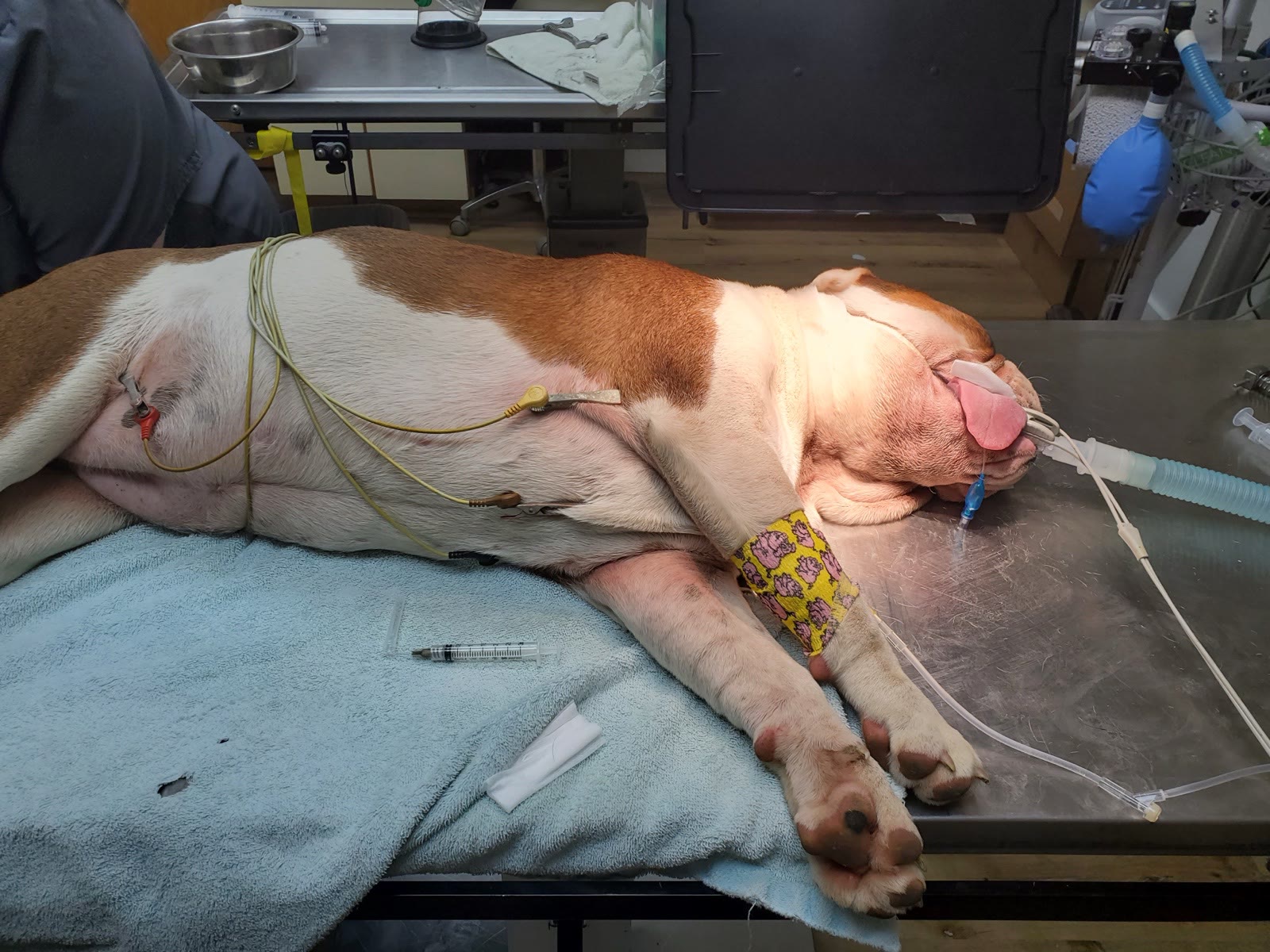
Anesthesia keeps a pet still and free of pain during surgery. It can also slow the heart and breathing and lower blood pressure, which is why a pet under anesthesia has to be watched closely from start to finish.
No anesthesia is free of risk, and we will not tell you otherwise. For most healthy pets, serious problems are uncommon, and good preparation and careful monitoring are how the risk is kept as low as it can be. Dr. Dan has 37+ years of surgical experience behind every procedure here.
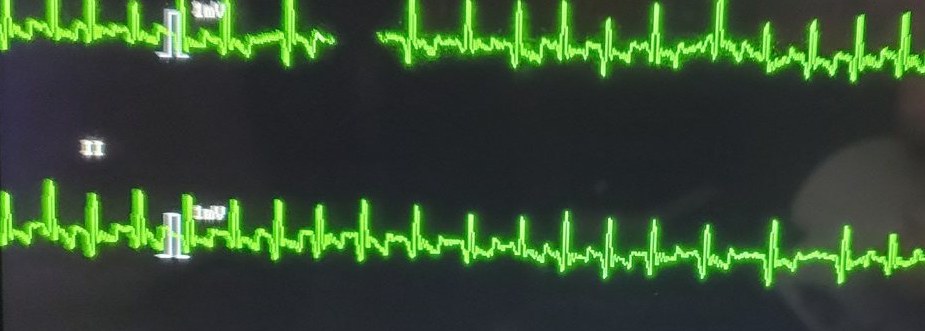
An EKG draws the heart's electrical activity as a line on a screen, so changes in heart rate and rhythm can be seen as they happen.
A trained team member watches your pet the whole time, tracking heart rate, EKG rhythm, blood pressure, oxygen level and temperature through the procedure and into recovery.
We use modern anesthesia protocols and tailor them to your pet's specific needs.
Your pet receives pain medication during and after surgery, and we send home what is needed for recovery.
Surgeries are designated for Wednesdays, Thursdays and Fridays. Here is how the day goes.
We examine your pet, talk through the procedure and answer your questions. Pre-anesthetic blood work helps us check organ function and spot possible risks.
Generally, no food after midnight, and water is usually fine until morning. Bring any medications your pet takes. Very young pets, diabetic pets, and rabbits and other small exotics often need different instructions, so ask us first.
Drop your pet off in the morning. We provide pre-operative care and keep you informed throughout the day.
Your pet is unconscious and does not feel the surgery. A trained team member monitors heart rate, EKG rhythm, blood pressure, oxygen level and temperature, and we use IV fluids, warming and pain control as needed. For flat-faced breeds, we give oxygen before anesthesia and keep a breathing tube ready.
Monitoring continues during recovery. Most pets go home the same day, with pain medication and detailed aftercare instructions.
Expect your pet to be sleepy and a little wobbly that evening. Keep things quiet, follow your instructions on food and activity, and call us with any questions.
Most pets bounce back quickly. Call (937) 779-3032 if you notice any of these:
Before surgery, please tell us about any recent cough, vomiting or diarrhea, any medications or supplements, and any past reaction to anesthesia. If you would like to know exactly how your pet will be monitored, just ask.
Trouble breathing or collapse is an emergency. Call us right away. After hours, call MEDVET at (513) 561-0069 or Care Center Cincinnati at (513) 530-0911.
If yours is not here, please call and ask.
We would much rather answer your questions ahead of time than have you worry. Call us and we will talk through what your pet needs and what the day will look like.
125 S Manchester Street, West Union, OH 45693