A pet that cannot stop scratching is miserable, and so is everyone trying to sleep in the same house. Dr. Dan Meakin has been treating itchy dogs and cats for more than 37 years. We look for the cause and work on making your pet comfortable at the same time.
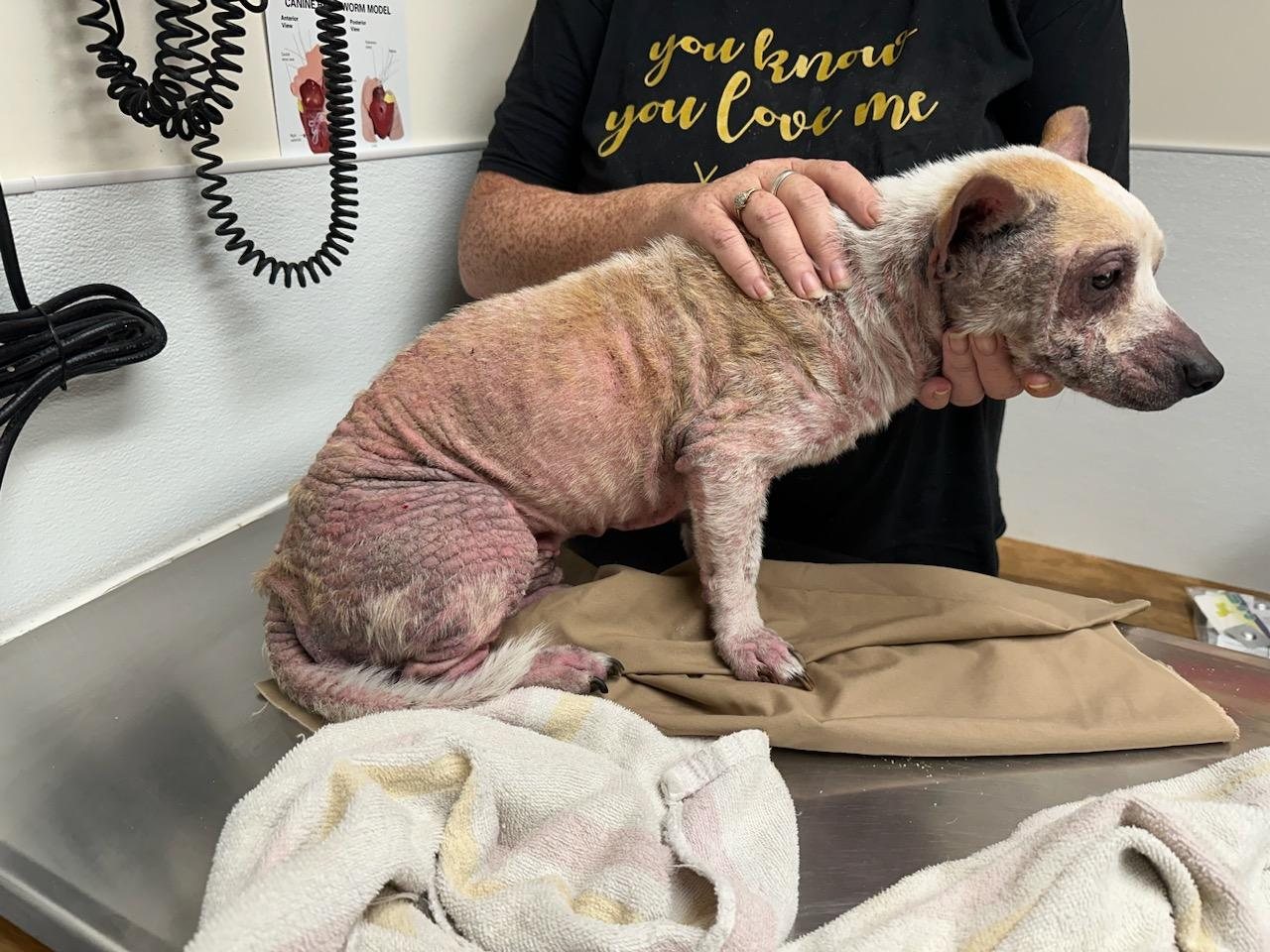
Constant itching wears a pet down. Scratching and licking break the skin, and broken skin can pick up bacterial and yeast infections that make the itch worse and hurt. Left alone, skin can lose its hair and turn red, thick and sore, like the skin on the dog pictured on this page.
Fleas are still where we start. In flea allergy dermatitis, a pet is allergic to proteins in flea saliva, and one bite can set off itching that lasts for weeks. You may never see a flea, because dogs and cats groom them away so well. Dr. Dan explains more in our article on flea allergy dermatitis.
Fleas are not the only possibility, so if the itch does not fit that pattern, we keep looking.
The first thing we rule out, even when no one has seen a flea
Things like pollen and dust mites, often seasonal at first
Less common than most owners expect, and slow to sort out
Mange mites, and bacteria or yeast on damaged skin
Sometimes skin trouble points to something like Cushing's disease
A skin visit is part detective work. Here is what to expect.
Tell us when the itching started, where it is worst, what flea prevention your pet gets and what you have already tried. Then we read the skin. Hair loss near the base of the tail and over the back points toward fleas. Tiny scabs around a cat's neck are another common clue.
We look for flea dirt, the droppings fleas leave behind, which can be there even when no live flea is. We may do a quick skin scrape to check for mange mites.
Damaged skin often has a bacterial or yeast infection that needs its own treatment. If the whole picture suggests something deeper, such as Cushing's disease, blood work may be the next step.
Options include Cytopoint, Apoquel or Zenrellia for dogs, steroids, medicated shampoos and topical products, in whatever combination fits your pet, with antibiotics when infection calls for them. We also get your pet on flea protection that works, such as Credelio, Bravecto, Simparica, NexGard or Capstar, and for cats NexGard Combo or Revolution Plus.
Skin problems are easier to treat before they turn into infections. Schedule a visit if you notice any of these:
Sudden swelling of the face, widespread hives, or vomiting, weakness or trouble breathing after a sting or new exposure can mean a serious allergic reaction. Call us at (937) 779-3032 right away. After hours, call MEDVET at (513) 561-0069 or Care Center Cincinnati at (513) 530-0911.
Never put a dog flea product on a cat unless a veterinarian has told you to. Some contain permethrin, which is dangerous for cats.
What owners most often ask us about skin trouble.
If your pet is scratching, licking or just cannot settle down, give us a call. The sooner we see the skin, the sooner your pet feels better.
125 S Manchester Street, West Union, OH 45693