The Golden Years Guide: How Advanced Diagnostics Unlock Better Senior Pet Care
The Golden Years Guide: How Advanced Diagnostics Unlock Better Senior Pet Care

Senior pets often hide illness remarkably well. A dog may still greet you at the door while losing weight, drinking more water, or developing a serious internal problem. A cat may continue eating while kidney disease, thyroid disease, arthritis, or cancer is quietly progressing.
That is why senior pet care in West Union and throughout Adams County is about more than watching for obvious symptoms. Regular examinations combined with blood work, X-rays, and ultrasound can help us find problems earlier, before they become emergencies.
At Adams County Veterinary Services, we know how much your pets mean to your family. Dr. Dan Meakin has more than 35 years of veterinary experience, including complex medicine and surgery, and our team treats every patient with the same loving attention we would give our own pets.
We are very busy caring for families from West Union, Manchester, Seaman, Peebles, Winchester, and surrounding communities. Even with enormous demand, we believe senior pets deserve careful, thorough evaluations and honest conversations about their health.
When Is a Pet Considered a Senior?
There is no single birthday that makes every pet “senior.” Large-breed dogs often age faster than small dogs, while cats are commonly considered senior around 10 years of age. Many dogs begin showing age-related changes around 7 or 8, although breed and individual health make a difference.
The important point is this: your pet may be entering the senior years before you notice anything seriously wrong.
A senior wellness visit gives us an opportunity to establish a baseline and compare future results. Small changes in kidney values, liver enzymes, blood sugar, thyroid levels, weight, or mobility may be meaningful when viewed over time.
Why Blood Work Matters for Older Pets
Blood work is one of the most valuable tools in senior pet medicine. It can reveal changes that are not yet obvious at home.
A typical senior workup may include:
- A complete blood count, or CBC
- Blood chemistry testing for kidney and liver function
- Blood glucose and electrolyte levels
- Urinalysis
- Thyroid testing when appropriate
- Additional testing based on your pet’s age, breed, symptoms, or medications
- Blood pressure measurement when indicated
Blood work does not replace a physical examination, and it does not diagnose every disease by itself. However, it can alert us to problems early and help us choose safe treatments.
For example, a senior dog with arthritis may need pain control, but we need to understand kidney and liver function before selecting certain medications. A pet scheduled for surgery may appear healthy outwardly, while blood work reveals anemia, infection, dehydration, or organ disease that must be addressed first.
What Conditions Can Blood Work Help Identify?
Kidney disease: Kidney problems are common in older dogs and cats. Blood values and urinalysis can show reduced kidney function, changes in urine concentration, protein loss, infection, or dehydration.
Liver disease: Abnormal liver enzymes may suggest inflammation, reduced liver function, medication effects, or changes related to cancer or endocrine disease.
Diabetes: Increased blood sugar, especially when paired with glucose in the urine and symptoms such as increased thirst and urination, may point toward diabetes.
Hypothyroidism: In dogs, low thyroid hormone can contribute to weight gain, low energy, skin and coat changes, and intolerance to exercise. Thyroid testing can help us determine whether those signs are related to hypothyroidism or another condition.
Cushing’s disease: Cushing’s disease can cause excessive drinking and urination, increased appetite, panting, muscle weakness, thin skin, hair loss, and recurrent infections. Routine blood work may reveal patterns that tell us additional endocrine testing is needed.
When we catch these conditions earlier, we have more time to manage them and protect your pet’s quality of life.
How X-Rays Help Senior Pets

X-rays provide a different kind of information than blood work. They allow us to evaluate bones, joints, the chest, and the general size and position of organs.
For a senior pet with stiffness or lameness, joint X-rays may help identify:
- Arthritis and bone remodeling
- Joint-space changes
- Previous injuries
- Fractures
- Bone tumors
- Other orthopedic conditions
Blood work cannot diagnose arthritis. Arthritis is primarily identified through your pet’s history, physical examination, and imaging when needed. However, blood work helps us rule out other causes of weakness or reduced activity and helps us plan safer pain management.
X-rays may also be recommended when a pet has a persistent cough, difficulty breathing, unexplained weight loss, or a known tumor. Chest imaging can help evaluate the heart and lungs and look for changes that require further investigation.
Dr. Dan has performed more than 1,000 orthopedic procedures and has extensive experience evaluating mobility problems. If your older dog is reluctant to climb stairs, struggling to rise, limping, or no longer enjoying normal activities, please do not assume it is “just old age.” Sometimes it is arthritis. Sometimes it is a treatable orthopedic condition. Sometimes it is a more serious, long-term illness.
What Ultrasound Can Reveal
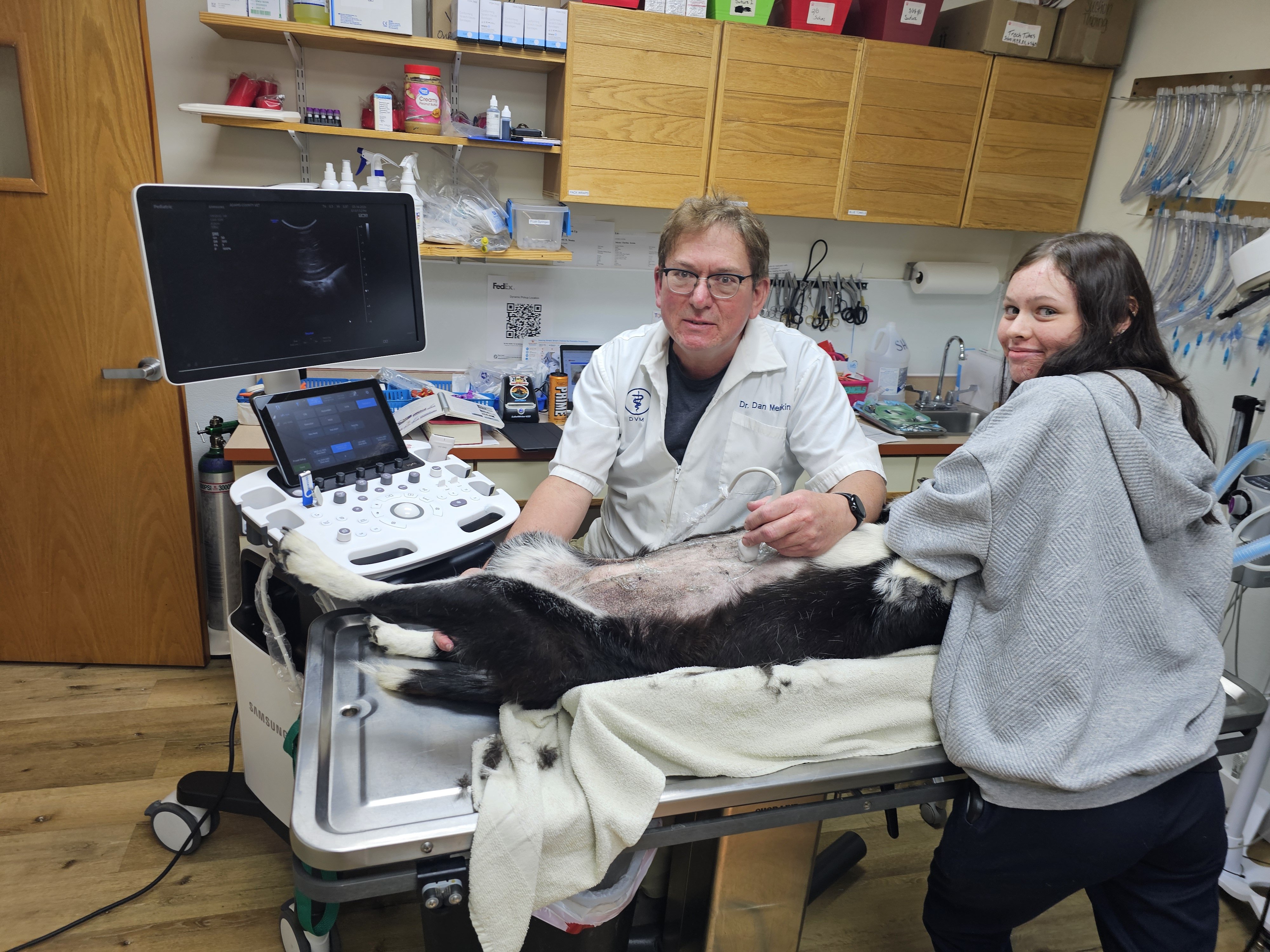
Ultrasound lets us examine soft tissues and abdominal organs in greater detail. It can be especially helpful when blood work is abnormal or when a pet has symptoms that do not have an obvious explanation.
Depending on the case, ultrasound may help evaluate the:
- Liver
- Kidneys
- Spleen
- Bladder
- Adrenal glands
- Intestinal tract
- Pancreas
- Reproductive organs
- Abdominal masses or fluid
Ultrasound can help us determine whether an organ is enlarged, whether a mass is present, or whether a structure has an unusual appearance. It may also help guide a fine-needle aspirate or biopsy when tissue sampling is needed.
Ultrasound does not automatically tell us whether a mass is cancerous. A sample may still be necessary. But finding a problem earlier gives us more options and allows us to discuss treatment realistically instead of discovering the problem during a crisis.
Senior Diagnostics and Cancer Detection
Cancer is one of the most serious diseases affecting older pets. It may begin as a small lump, subtle weight loss, reduced appetite, or a change in energy. It can also develop internally without producing obvious signs until the disease is advanced.
During a senior evaluation, we may recommend diagnostics such as:
- Blood work and urinalysis
- X-rays of the chest or affected area
- Abdominal ultrasound
- Fine-needle aspirate of a lump
- Biopsy and laboratory analysis
Not every lump is cancer, but every new or changing lump deserves attention. A growth that is increasing in size, bleeding, ulcerating, or interfering with eating or movement should be evaluated promptly.
Dr. Dan’s experience includes difficult growth removals, thyroid surgeries, amputations, facial and dental cancer procedures, and other complex oncology cases. Our goal is always to give you clear information, discuss realistic options, and protect your pet’s comfort and quality of life.
Learn more about our oncology and cancer services.
Senior Pet Care: Common Questions
Does my senior pet need blood work if they seem healthy?
Often, yes. Pets can compensate for disease until they are suddenly very sick. Wellness blood work establishes a baseline and may identify early changes before symptoms become severe. For many senior pets, testing every 6 to 12 months is reasonable, depending on age, medical history, and medications.
Does every senior pet need an X-ray or ultrasound?
Not necessarily. Imaging is individualized. We may recommend it because of your pet’s symptoms, physical examination, blood work, breed, history, or known medical condition. Some pets need joint X-rays for arthritis, while others need chest or abdominal imaging.
Is my pet too old for treatment or surgery?
Age alone does not determine whether treatment is appropriate. We consider your pet’s overall health, blood work, organ function, mobility, comfort, and quality of life. Many senior pets do well when a problem is identified and managed appropriately.
What signs should prompt an appointment?
Please contact us if you notice:
- Weight loss or a changing appetite
- Increased thirst or urination
- Vomiting or diarrhea that persists
- Difficulty rising, walking, or jumping
- New lumps or rapidly growing masses
- Persistent coughing or breathing changes
- Excessive panting
- Weakness, confusion, or behavior changes
- Skin, coat, or nail changes
- Repeated infections
Do not wait for a collapse or an emergency if something seems different. Early evaluation is usually safer, more practical, and more affordable than waiting until a condition becomes severe.
Give Your Senior Pet More Good Years
We cannot stop pets from aging, but we can help them age with greater comfort and dignity. Regular examinations, blood work, X-rays, and ultrasound give us a clearer picture of what is happening inside your pet and help us respond before a manageable issue becomes a crisis.
At Adams County Veterinary Services, we welcome senior pets and new clients from West Union, Adams County, and the surrounding area. Dr. Dan Meakin brings more than three decades of experience, but our approach remains personal: we listen, we explain, and we treat your pet like family.
Request an appointment, call us at 937-779-3032, or message us on Facebook. We are located at 125 S Manchester Street in West Union, Ohio.
Please do not wait until your older companion is in crisis. A senior wellness visit today may help protect many more comfortable, happy days tomorrow.
THANK YOU FOR TRUSTING US WITH THE PETS YOU LOVE: and PLEASE LEAVE US A REVIEW IF WE HAVE HELPED YOUR FAMILY!